You Belong Here: What Jesus Teaches Us About Radical Welcome
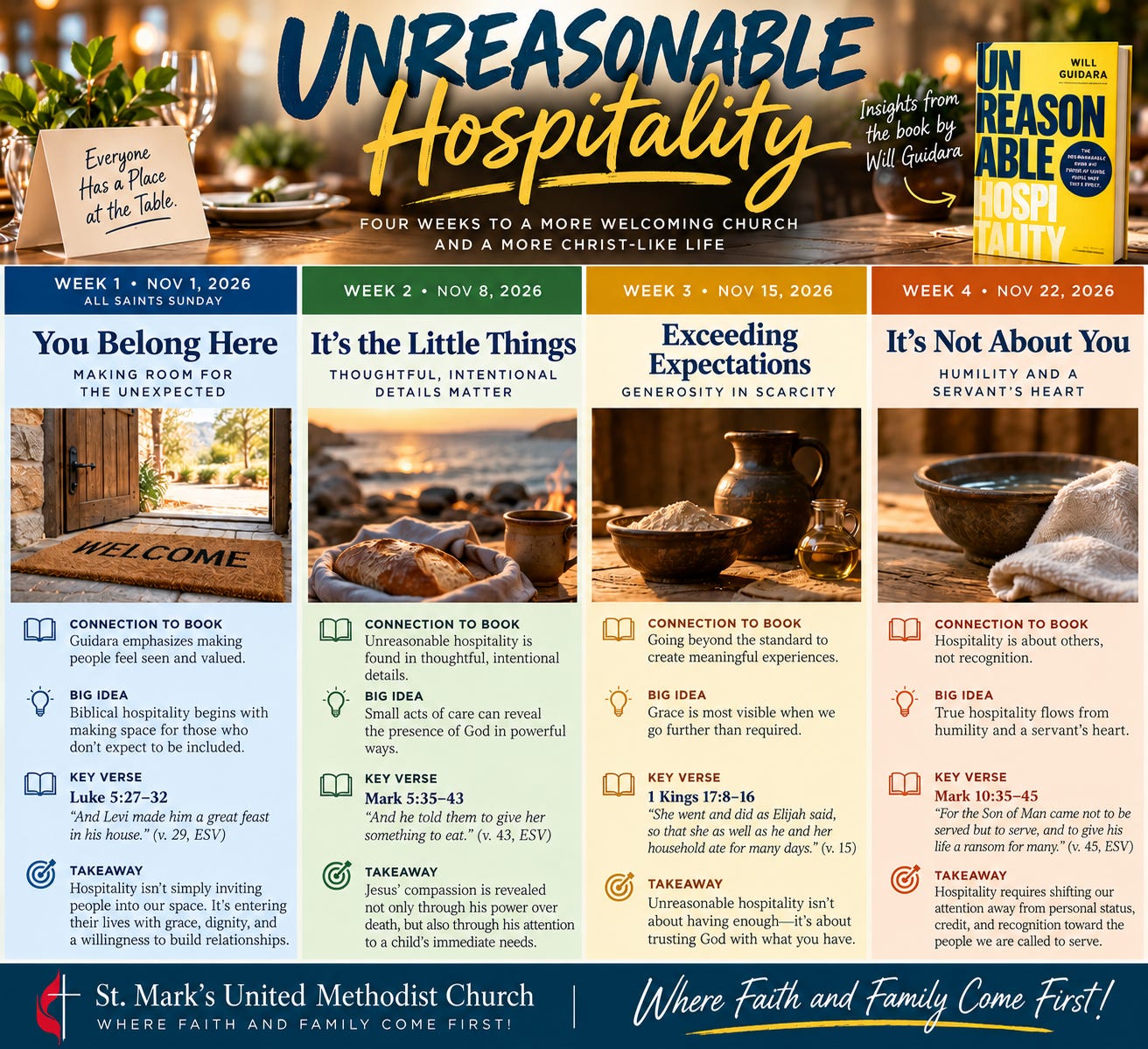
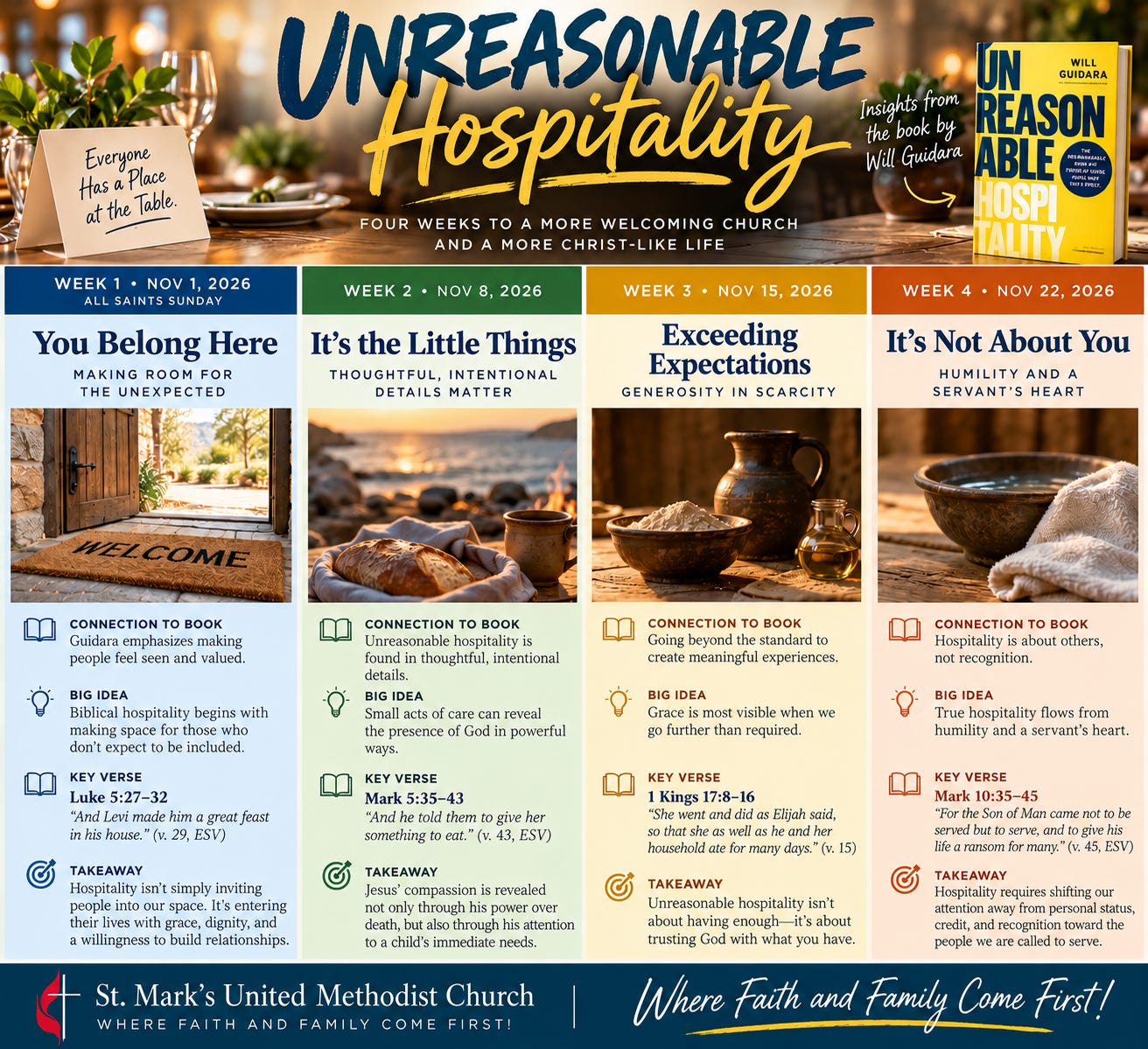
What does it mean to truly make someone feel like they belong? In a world where people carry labels, wounds, and doubts about whether they are welcome anywhere, the story of Jesus calling Matthew offers a powerful and timely answer. This is the first message in a series on unreasonable hospitality, and it begins with a simple but profound truth: Jesus saw people that others overlooked, and He invites us to do the same.
Have You Ever Felt Like You Didn’t Belong?
Most of us know the feeling. You walk into a room where everyone seems to know each other. You scan for a familiar face and find none. You wonder if anyone would notice if you slipped out the back door.
Walking into a new church can feel exactly that way. Everyone knows where to sit, everyone knows each other, and you’re just hoping you don’t accidentally take someone’s pew.
But we also know what it feels like when someone notices us. When someone walks across the room, introduces themselves, and says, “I’m so glad you’re here.” When they remember your name the second time you show up. Suddenly, everything changes.
What Does the Bible Say About Welcoming Outsiders?
In Luke 5:27-32, Jesus does something that shocks the religious establishment of His day. He calls a tax collector named Levi, also known as Matthew, to follow Him.
“After this he went out and saw a tax collector named Levi, sitting at the tax booth. And he said to him, ‘Follow me.’ And leaving everything, he rose and followed him. And Levi made him a great feast in his house, and there was a large company of tax collectors and others reclining at the table with them. And the Pharisees and their scribes grumbled at his disciples, saying, ‘Why do you eat and drink with tax collectors and sinners?’ And Jesus answered them, ‘Those who are well have no need of a physician, but those who are sick. I have not come to call the righteous but sinners to repentance.’” - Luke 5:27-32 English Standard Version (ESV)
Why Was Calling Matthew Such a Big Deal?
Tax collectors in the first century were widely resented. They collected revenue for the Roman Empire and were associated with exploitation and injustice. For many in the community, Matthew represented everything they despised about Roman authority and economic oppression.
He was not someone people wanted sitting next to them at dinner, much less someone they expected Jesus to call as a disciple.
And yet Jesus saw Him. Not just a tax collector. Not just a profession or a reputation. Jesus saw a person. He saw a disciple where everyone else saw a problem.
Everybody else saw a tax collector. Jesus saw a disciple.
How Does Matthew’s Response Model Christian Hospitality?
The story does not end with the calling. What happens next is just as important. Matthew throws a feast. He gathers tax collectors and others around the table with Jesus. He does not keep his encounter with Jesus to Himself. He wants others to experience it too.
This is a beautiful picture of how Christian hospitality works. Grace is received, and then grace is extended. The table grows. Room is made for more people to encounter Jesus.
The Pharisees and scribes are troubled by this. In the ancient world, sharing a meal carried deep social and relational significance. Eating together communicated acceptance, fellowship, and belonging. It was reserved for your inner circle. The religious leaders saw the people at the table as a problem. Jesus saw people who needed healing and restoring grace.
Who Gets to Sit at the Table?
That is the real question beneath the Pharisees’ complaint. And it is a question the church still wrestles with today.
We may not have tax collectors sitting outside our doors, but we do encounter people who wonder whether they would be welcomed. That might include:
Someone who hasn’t attended church in decades and wonders if they’ll be judged for it
Someone carrying guilt over past decisions
Someone going through a divorce
Someone struggling financially
Someone who has been hurt or rejected by a church before
Someone who doesn’t know the hymns, the prayers, or when to stand and sit
Sometimes the greatest barrier to entering a church is not the front door. It is the fear of what might happen once someone walks through it.
What Is Unreasonable Hospitality and Why Does It Matter for the Church?
The concept of unreasonable hospitality comes from a book by Will Guidara, which challenges people to move beyond merely providing good service toward creating experiences where others feel genuinely valued. The idea is about thoughtful attention and personal connection that makes people feel truly seen.
That principle is valuable for any organization, but for the church, hospitality runs even deeper. A restaurant may practice extraordinary hospitality to create an unforgettable experience. But as followers of Jesus, we practice extraordinary hospitality because we have already experienced it through an unforgettable grace.
Hospitality is not just about having open doors. It is about opening the hearts of the people who walk through them.
Who Are the Saints Who Made Room for You?
On All Saints Sunday, it is worth pausing to think about the people who helped us feel like we belonged. Perhaps it was a parent or grandparent. A Sunday school teacher who took a genuine interest in you. A pastor who called or visited during a hard season. Someone who invited you to sit beside them. Someone who believed in you when you struggled to believe in yourself.
These are the people whose faith helped shape our own. Some are still with us. Others are among the saints we remember and give thanks for today.
How many of us are sitting in church today because someone, somewhere along the way, made room for us? And maybe they never realized how much that small act of hospitality would matter.
Practical Questions for Every Church Community
Reflecting on this passage raises some honest and important questions worth sitting with:
Do we notice people? Do we see the visitor who looks uncertain? Do we remember someone’s name the second time they show up?
Do we make room for people, not just physical space in a pew, but space in conversations, relationships, and ministry?
Do we make room for those whose lives are complicated or whose faith is still developing?
Do we help people discover that they matter, to us and to God?
Are we welcoming people into a building, or are we helping them experience God’s love through genuine relationship?
Jesus made room for Matthew at the very beginning of His journey, not after Matthew had everything figured out. That is the model we are called to follow.
The Table Is an Invitation, Not a Reward
Every time we gather at the communion table, we are reminded that this table is not a reward for having everything figured out. It is an invitation to grace that calls us into transformation. It is a place where we can say, “God, forgive me and thank you for loving me.” And sometimes we need to say that more than once. That is part of being human.
The story is not finished. There are still people waiting to be noticed. People wondering whether they would be welcomed. People searching for a place where they can experience hope, forgiveness, and love.
And perhaps God is calling each of us to become the very people who help them discover that this is that place. Through His grace, we can look at someone who feels forgotten, overlooked, or unwelcome, and say with confidence: you belong here.
Life Application
This week, make it your intentional practice to notice one person who might be on the outside looking in. It could be a visitor at church, a coworker who seems disconnected, a neighbor you have never spoken to, or someone in your community who carries a label the world has placed on them. Do something specific to make them feel seen and welcomed. Learn their name. Invite them to sit with you. Offer a kind word. Make room.
Just as Jesus saw Matthew beyond His reputation and called Him forward, we are invited to see people the way Jesus sees them, and to extend the same grace we have already received.
Ask yourself:
Is there someone in my life right now who might be wondering if they belong, and what is one thing I can do this week to help them feel welcomed?
Am I holding back from extending hospitality to someone because of assumptions I have made about who they are or what they have done?
Who were the people who made room for me in my own faith journey, and how can I honor their legacy by doing the same for someone else?